
Insights
Guide to Commercial Kitchen Regulations in the UK
Explore the key regulations for UK commercial kitchens, from food safety and licensing to gas, fire, layout, waste and equipment compliance.
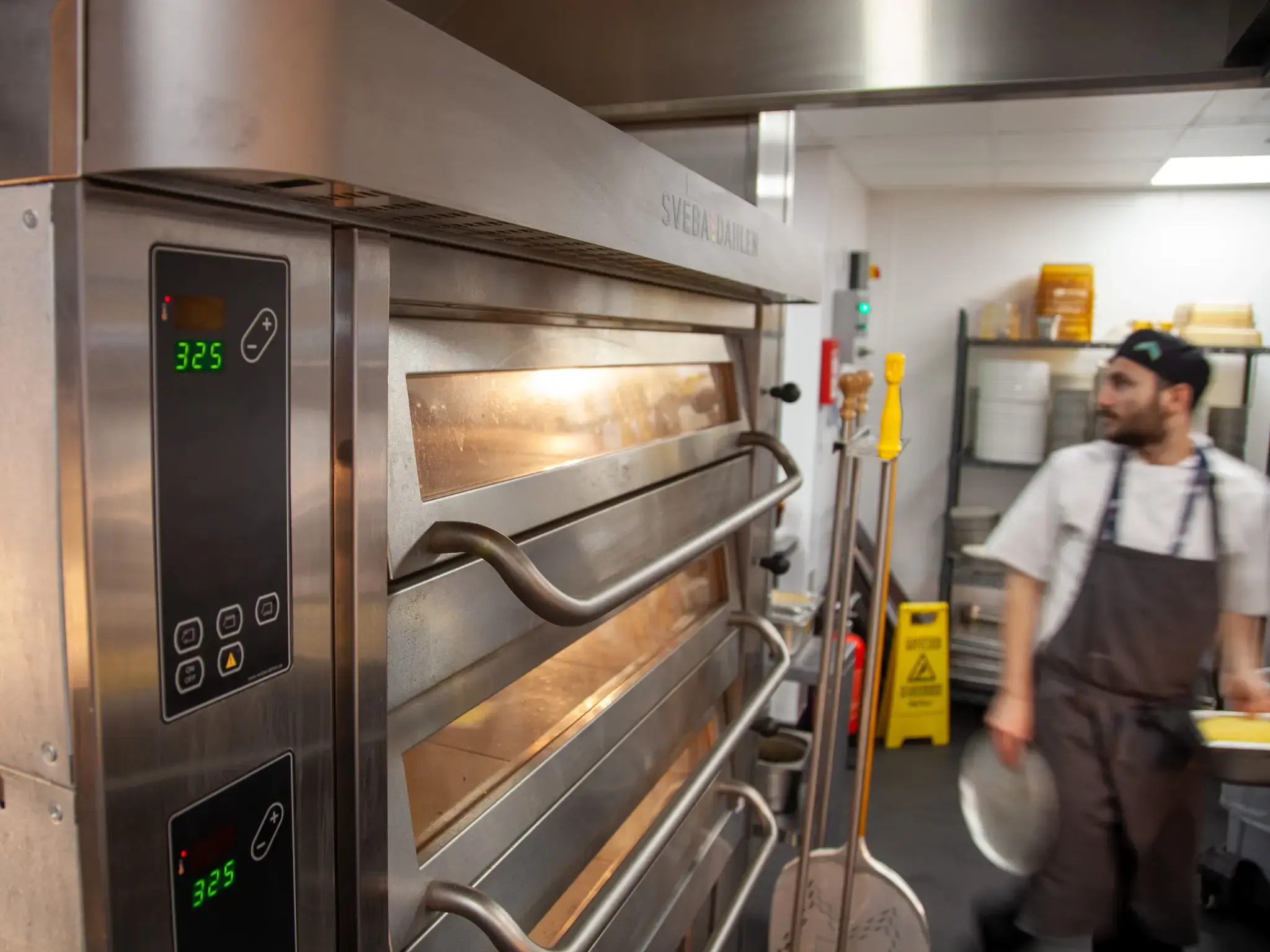
When setting up a commercial kitchen business or franchise in the UK, it's essential to comply with the national regulations. If you're concerned about adapting your current restaurant for the UK market, or you're setting up a food business from scratch, our guide to UK commercial kitchen laws and regulations can help support you through the process.
We'll cover food safety laws, workplace health and safety regulations, gas safety regulations, equipment standards, and more, providing you with a straightforward commercial kitchen compliance checklist.
What Constitutes a Commercial Kitchen in the UK
A commercial kitchen is defined as a professional space designed for public food preparation. Any space that falls under this definition must therefore comply with the laws and regulations outlined in this guide.
Health and Safety Regulations for Commercial Kitchens
Health and Safety Regulations to Protect Customers
Likely the most well-known and obvious regulations for commercial kitchens to follow are those outlined in the Food Safety Act (1990). Under this act, UK commercial kitchens must follow a Food Safety Management System (FSMS) informed by Hazard Analysis and Critical Control Points (HACCP). Our guide to commercial kitchen risk assessments and HACCP can teach you how to conduct a thorough and accurate HACCP assessment correctly.
Reducing cross-contamination is also a vital part of the Food Safety Act (1990), especially regarding allergens and vegan/vegetarian dishes. Clear allergen information must also be displayed for all food served. Our guide to commercial kitchen allergen management can help you avoid cross-contamination.
Another major legal requirement is undergoing food hygiene inspections under the Food Hygiene Rating Scheme. Through this, you will obtain a rating of 0-5, which must be clearly and publicly displayed.
Health and Safety Regulations to Protect Employees
While the Food Safety Act primarily focuses on the health and safety of commercial kitchens for consumers, the Health and Safety at Work Act 1974 and the Workplace (Health, Safety and Welfare) Regulations 1992 address the safety of employees in your commercial kitchen.
The Health and Safety at Work Act primarily deals with protecting employees from harm by conducting risk assessments, while the Workplace (Health, Safety and Welfare) Regulations focus on ensuring the health, safety, and welfare needs of employees are met.
Examples of compliance with the Workplace (Health, Safety and Welfare) Regulations in a commercial kitchen include:
- Ensuring effective ventilation
- Maintaining a comfortable temperature
- Ensuring adequate space for ease of movement
- Ensuring sufficient lighting
- Providing adequate sanitary services/washing facilities
- Fitting appropriate safety devices (such as fire safety devices) to doors and gates.
- Floors/traffic routes should be even, slip-resistant and free of trip hazards
- Ensuring surfaces are easy to clean and waste disposal is simple and accessible
- Diligent upkeep of maintenance practices, which we explore further in our ultimate guide to commercial kitchen maintenance.
Licensing and Permits Required for Commercial Kitchens in the UK
To operate any commercial kitchen in the UK, you must be a registered food business and register with your local authority at least 28 days before opening. If you serve alcohol, provide entertainment, or serve food late at night (between the hours of 11 pm and 5 am), you’ll need to procure additional licences for this.
It’s also vital to have the correct insurance, including:
- Public liability insurance - Insurance cover for if a member of the public is injured or has their property damaged on your premises.
- Employer’s liability insurance - Insurance for if a member of staff is injured on your premises.
- Product liability insurance - Covers claims related to food and drink made and/or served on your premises.
- Contents and stock insurance - Covers repair or replacement for furniture or kitchen equipment that is damaged or stolen.
- Business buildings insurance - Covers repairs for your premises in the event of fire, flood, storm, or break-in damage.
- Business interruption insurance - Supplements lost income if your business must be temporarily closed following an insured event such as a fire.
Gas Safety Regulations for Commercial Kitchens in the UK
It is a legal requirement for all commercial kitchens using gas equipment to have an annual safety inspection and obtain a valid Gas Safety Certificate.
The performing Gas Safe engineer must possess the COCN1 qualification, plus relevant endorsements for the gas type and appliance type. These appliance-specific qualifications are:
- COMCAT1: Range Cookers, Bain Maries, Combi Ovens
- COMCAT2: Pressure Water Boilers/Steamers
- COMCAT3: Fryers, Griddles, Grills
- COMCAT4: Fish and Chip Ranges
- COMCAT5: Forced Draught Burner Appliances (e.g., Pizza Ovens)
Mobile catering vehicles also require an additional Commercial/Mobile Catering/LPG certification.
Request a Gas Safety Check with Airedale today.
Fire Safety Regulations for Commercial Kitchens in the UK
Fire risk is a particularly prevalent concern in commercial kitchens due to the hot cooking equipment. Because of this, following the Regulatory Reform (Fire Safety) Order 2005 is essential. This necessitates fire safety risk assessments to be carried out on your premises and the subsequent adoption of the necessary fire safety measures.
In a commercial kitchen, one of these essential measures is the installation and maintenance of a proper ventilation system, with properly sized and fully functioning hoods above all necessary equipment. To help you with this, we have a guide to efficient ventilation installation and a guide to commercial kitchen ventilation maintenance.
Other measures include:
- Maintaining clear escape routes
- Installing the proper fire detection and alarm systems
- Having accessible and available firefighting equipment, e.g. fire extinguishers
Environmental Regulations for Commercial Kitchens in the UK
Taking care of environmental responsibilities is of growing importance throughout every industry in the UK, and commercial kitchens are no exception. Under the Environmental Protection Act (1990), food waste in England, including fats, oils and grease, must be responsibly disposed of to prevent pollution, and businesses must hold waste management licenses from national environmental regulators. Furthermore, as of March 2025, food waste must be separated from general waste streams and handled by specially licensed waste carriers.
However, legislation is slightly different in Scotland and Wales. Here, commercial food waste macerators and food digesters using enzymes are banned, with the exception of food particles washed off of produce and equipment during preparation. For other food waste, refer to the Foodservice Equipment Association’s guide on food, oil and grease. One crucial thing to note is the guidance that grease-trapping equipment should be used, and that this will also help with trapping other organic matter.
An upcoming Environment Bill will likely bring many of these regulations to England, too. So, we advise operators to diligently keep an eye on the latest developments if setting up operations in England.
Commercial Kitchen Layout Regulations in the UK
Your commercial kitchen layout must be conducive to ensuring the best possible waste management and cleanliness, and the lowest possible risk of cross-contamination, as outlined in the property standards. This includes:
- Ensuring an adequate number of closed-lid waste disposal units
- Ensuring an adequate number of sinks, including separate sinks for washing food, for washing hands and for washing utensils
- Ceilings designed to prevent condensation
- Windows and doors designed to prevent dirt buildup
Our guide to the essential elements of a commercial kitchen layout can help you further with adapting your kitchen design to UK standards, or you can consult with one of our specialist commercial kitchen designers.
Equipment Standards in UK Commercial Kitchens
A commercial kitchen is, of course, a workplace, and any equipment used in a workplace falls under the Provision and Use of Work Equipment Regulations (PUWER). These regulations aim to ensure equipment is safe to use for its intended purpose, correctly installed and properly maintained.
When working with a design, installation and maintenance provider like the Airedale Group, you can trust our expert nationwide team of engineers to help you remain PUWER compliant.
Want our specialist help in moving your commercial kitchen franchise into the UK, or keeping your current UK commercial kitchen operations compliant? Contact us today.