
Insights
How to Select the Correct Equipment for Your Commercial Kitchen
Learn how to choose commercial kitchen equipment based on kitchen size, menu, sector, energy source, maintenance needs and long-term value.
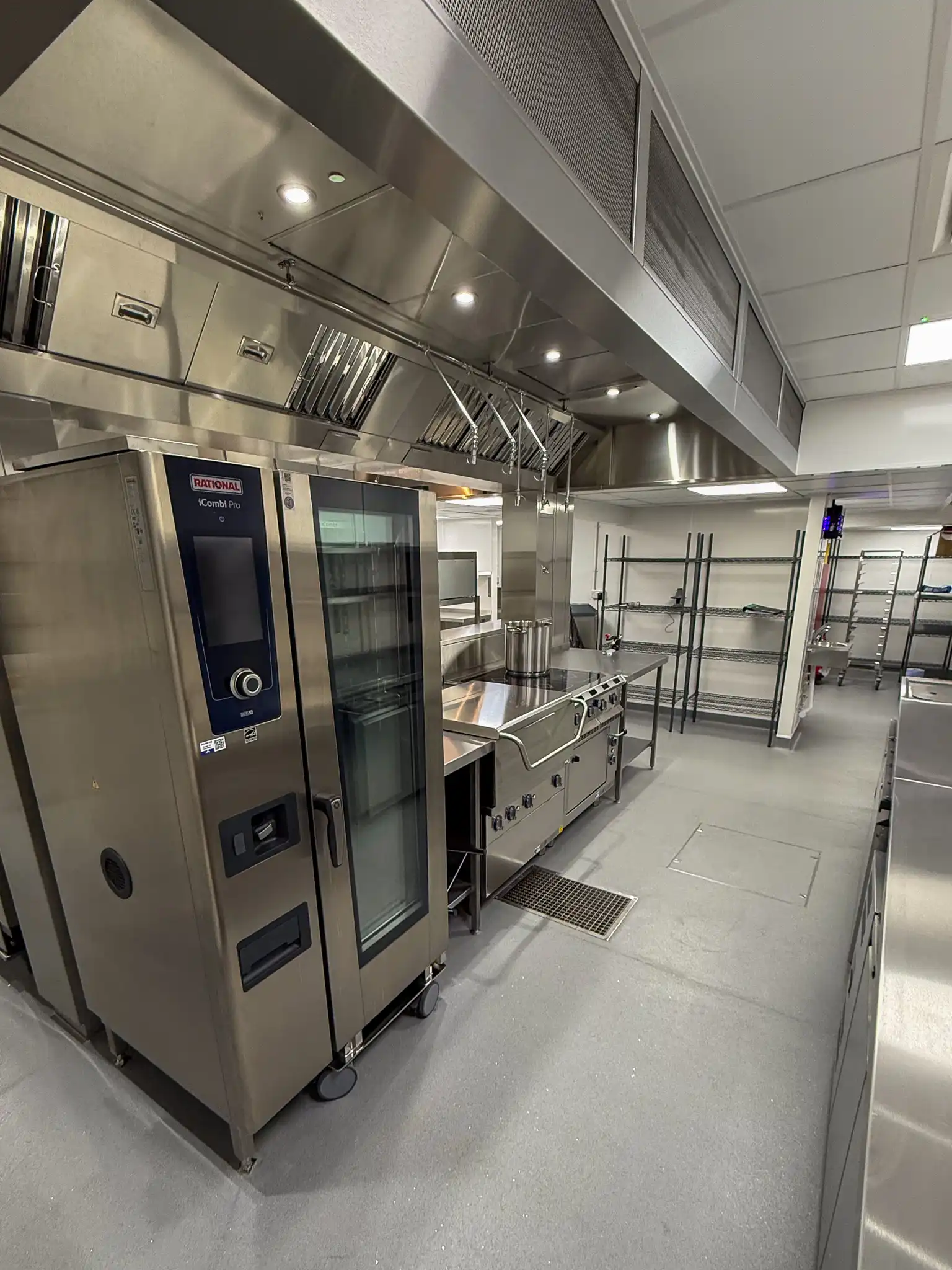
Commercial kitchen equipment is a significant investment. Making the wrong choice can negatively impact your kitchen's efficiency and the quality of its output. That's why we've created this guide to match the best equipment to your commercial kitchen type, considering scale, sector and more.
Selecting the Right Equipment for Your Commercial Kitchen’s Size
Size is one of the most significant factors in your choice of equipment, considering both the size of your kitchen and the size of your customer base.
The more sizeable your kitchen, the more varied your options for equipment become. However, choosing equipment for a small commercial kitchen may require space-saving savviness, particularly if you are serving a larger number of covers.
Examples of small kitchens that require especially smart equipment choices include ghost kitchens and sometimes school kitchens with limited space. For kitchens like this, equipment that doubles as prep space is a great solution.
It’s also crucial to be realistic about what equipment you really need, cutting out unnecessary extras or pieces of equipment required only for less profitable menu items. Working with a specialist designer can help you identify which equipment may be unnecessary.
See our guide to commercial kitchen layout planning for more tips on efficient space use.
Choosing the Best Refrigeration Equipment for Your Commercial Kitchen
When choosing refrigeration equipment for your commercial kitchen, it’s important to match refrigeration to food volume. For a particularly large kitchen, cold rooms (also known as walk-in refrigerators) can be a great choice, despite high initial cost, due to the reduction in stock wastage and the flexibility in space that they provide.
For small kitchens that still carry a significant quantity of perishable stock, integrating space-saving in or under-counter refrigeration units into your prep stations can provide ample refrigeration without taking up excessive floor space.
Which is the Best Oven for Your Commercial Kitchen?
Before selecting a type of commercial oven, consider your power source. Gas is an obvious choice and affordable when compared to other methods. However, if the building doesn’t have a preexisting gas supply, installing one can be costly, and you may wish to consider an electric oven instead.
With gas commercial kitchen equipment comes commercial kitchen gas safety regulations, including the necessity of Gas Safe-registered engineers for all maintenance works. You’ll also need to be diligent about annual gas safety checks.
In terms of oven types, the following are the most common in commercial kitchens.
- Standard ovens offer a variety of cooking options, but they cook food at a slower rate than some alternatives.
- Convection ovens include fans which can circulate air to cook faster and ensure even cooking. It doesn’t require as high a temperature as a standard oven, helping with costs in the long run.
- Steam ovens cook with water vapour, making them an ideal choice for health-focused restaurants. However, they cannot brown or crisp food as well as other ovens can.
- Combi ovens cook as much as 40% faster than conventional alternatives and provide even cooking. They are one of the most popular choices for modern commercial kitchens.
- Conveyor ovens move the food through the oven and out the other side cooked. This extremely fast method is excellent for certain food items, like pizza, but is not recommended for delicate or small food items.
Commercial Kitchen Equipment in the Public Sector
Kitchens for public facilities such as schools and hospitals require equipment for simple batch cooking to serve nutritious meals to a high volume of diners. Combi ovens often work best for this, depending on size. Plus, hot holding units to keep food warm across staggered lunches.
For speed and efficiency, preparation appliances such as food processors and mixer grinders are recommended. Lastly, servery counters can be used for easier meal distribution.
Selecting Equipment for QSRs
The equipment for a QSR operation depends on the size and type of venue - a large restaurant with seating, a smaller takeaway-only venue or a ghost kitchen. In a large storefront, you’ll require equipment for all menu items, including spares for any pieces of equipment that are central to your core offering. For a QSR, this often includes grills and fryers. Having multiple of these ensures you can still provide your signature items if one breaks down. As speed and efficiency are key to a QSR, equipment must be maintained for optimal efficiency.
Conversely, a ghost kitchen often has relatively tight spaces, and operators must be ruthless in deciding which menu items can be profitably offered with a limited amount of equipment. Often, only the equipment required for the core menu should be included.
Our guide comparing ghost kitchens to traditional shopfront QSRs delves deeper into the crucial differences between the two in terms of design, running and more.
Choosing the Best Brand of Commercial Kitchen Equipment
When outfitting your commercial kitchen, it’s also essential to carefully select the equipment manufacturers you wish to work with. Consider warranties, reputation and more when selecting. You’ll also want to consider how established the brand is, the availability of parts, and how many engineers are likely to be skilled in maintaining equipment for your chosen OEM (Original Equipment Manufacturer) after your warranty expires.
At Airedale, we’re proud to have strong relationships with the major manufacturers, including select partnerships with brands such as the respected commercial kitchen equipment OEM Middleby, and its sub-brands such as TurboChef, Lincat, and Carter Hoffman. This means our engineers are familiar with the needs and mechanics of equipment from a range of respected OEMs.
Custom Commercial Kitchen Equipment
For unique restaurants with distinct needs or complex cuisines, bespoke equipment can be necessary. Through our specialist factory, Airedale offers custom equipment fabrication for complex kitchen shapes and sizes, as well as other bespoke needs.
The Importance of a Consultant When Selecting Commercial Kitchen Equipment
A specialist commercial kitchen interior design consultant can be crucial in selecting the optimal equipment for your commercial kitchen. Offering an insightful and experienced perspective, your consultant can identify innovative solutions and introduce new equipment options tailored to your needs.
Interested in equipping your commercial kitchen with the help of an Airedale designer? We have decades of experience selecting and creating equipment for large-scale industrial kitchens and multi-site operations.
Simply fill out our contact form to see how we can help you.