
QSR Whitepaper
Building Resilience in UK QSR Operations: Lessons from the Field
In this whitepaper, we offer detailed quick service restaurant industry analysis from the perspective of a trusted maintenance partner, unpacking common vulnerabilities, critical considerations and much more.
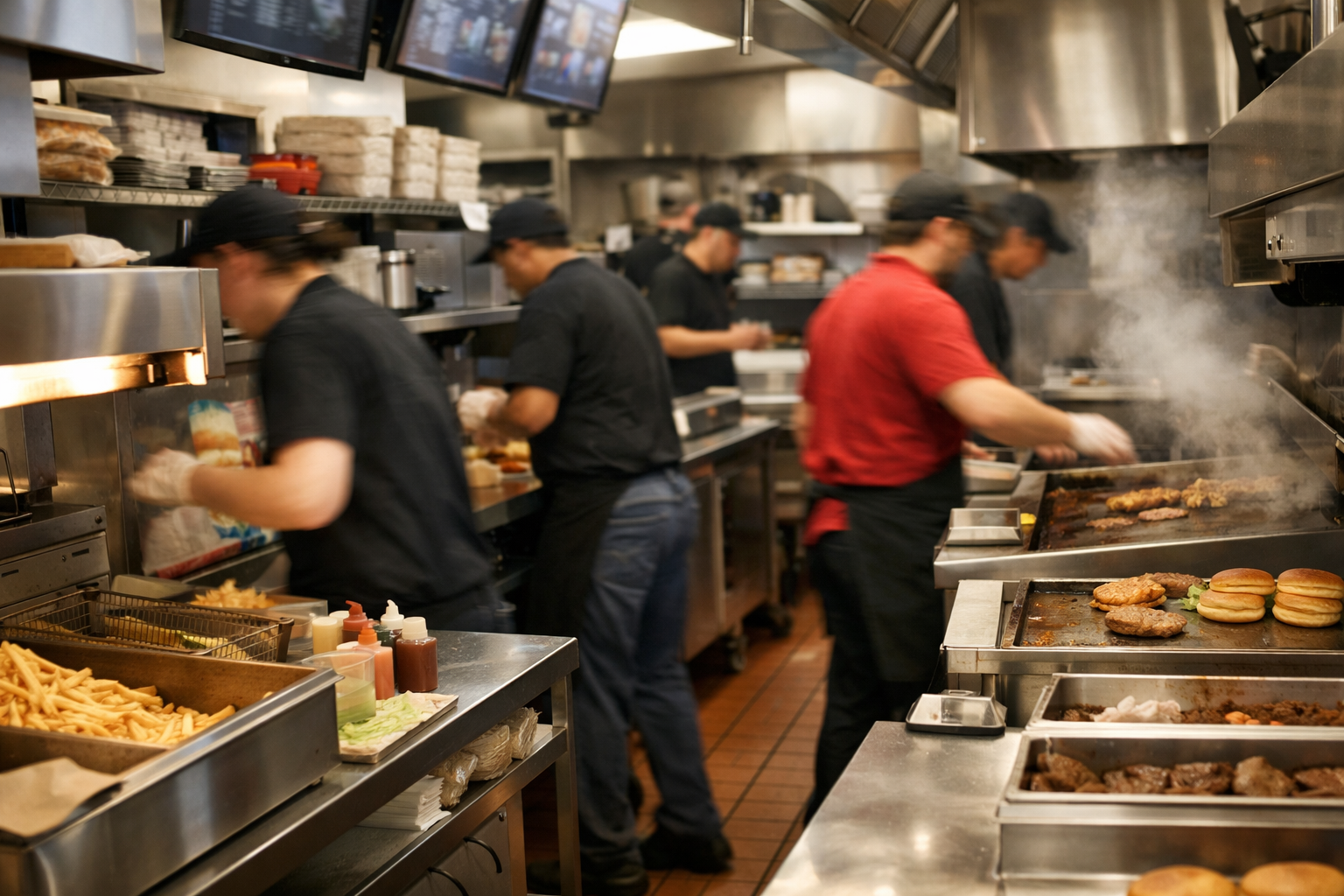
Over decades of work supporting QSRs, we've developed a deep understanding of the best practices for ongoing success.
For example, one insight we’ve gained as a maintenance partner for several major brands is that the post-warranty period is a crucial time for QSR sustainability, at which point operators must act wisely and strategically.
Are you a QSR operator looking to unlock greater resilience and longevity for your restaurants? Simply fill out the form on this page to receive your free digital copy.
Trusted by:


.svg)



QSR Resilience Scorecard
A key feature of the whitepaper, designed to help operators assess estate resilience
The whitepaper includes a practical QSR Resilience Scorecard to help multi-site operators benchmark how well their kitchens are set up to protect uptime, control cost, maintain compliance and deliver consistent service.
Covering areas such as equipment reliability, planned maintenance, energy use, asset visibility, food safety processes and operational behaviours, the scorecard gives teams a structured way to identify where resilience is strong, where risk may be building and where improvement efforts should be prioritised.
Why Download this Whitepaper?
Gain practical insight for QSR operators under pressure
QSR estates are being asked to deliver more with less: faster service, tighter cost control, stronger compliance, better uptime and greater consistency across every site. This whitepaper explores how operators can build more resilient kitchen operations by looking beyond individual equipment issues and focusing on the systems, behaviours and data that shape day-to-day performance.
Download the whitepaper to understand where operational risk typically builds across multi-site QSR estates, and how a more proactive, insight-led approach can help protect revenue, reduce avoidable cost and support better decision-making across property, operations, facilities and finance teams.
Inside the whitepaper, we explore:
-
How equipment downtime affects service, sales and customer experience
-
Where hidden energy waste and inefficient kitchen behaviours can build across an estate
-
Why planned maintenance, asset data and operational insight need to work together
-
How multi-site operators can improve visibility, consistency and control
-
The role of connected data in reducing reactive decision-making
-
Practical opportunities to improve uptime, compliance, cost control and lifecycle performance
Read to bulletproof your operations?
FAQs
How can QSR operators reduce equipment downtime during peak hours?
How can QSR operators reduce equipment downtime during peak hours?
Minimising downtime requires moving beyond reactive break-fix cycles. The whitepaper outlines a Tiered Maintenance Model that allows operators to categorise equipment by its impact on the core menu. By aligning response times (such as 4-hour vs. 24-hour call-outs) with the criticality of the asset, you ensure that your most vital revenue drivers are always the priority.
What are the most common maintenance vulnerabilities in a QSR kitchen?
What are the most common maintenance vulnerabilities in a QSR kitchen?
While mechanical wear was once the primary culprit, modern QSR equipment is increasingly susceptible to electronic and circuitry failures, often exacerbated by grease buildup and poor ventilation. Our research highlights why the ventilation system is often the Achilles heel of the kitchen and provides a checklist to identify these vulnerabilities before they cause a complete operational halt.
How do I manage the transition from OEM warranty to post-warranty maintenance?
How do I manage the transition from OEM warranty to post-warranty maintenance?
The end of a warranty often creates a "Brand-Risk Gap" where equipment is vulnerable and no proactive contract is in place. To ensure a seamless transition, operators should begin planning months in advance. The whitepaper provides a roadmap for a successful post-warranty transition, including how to maintain asset integrity and avoid paying for repairs on parts still covered by manufacturer guarantees.
Can proactive maintenance actually reduce energy costs?
Can proactive maintenance actually reduce energy costs?
There is a direct link between equipment health and energy efficiency. For example, poorly maintained refrigeration or clogged gas burners must work significantly harder to maintain temperature, leading to spiked utility bills. We provide data-backed evidence on how a structured Planned Preventative Maintenance (PPM) framework contributes to both operational resilience and sustainability targets.
What is the benefit of a national maintenance partner vs. local contractors?
What is the benefit of a national maintenance partner vs. local contractors?
For multi-site operators, the primary advantage is centralised data and consistency. A national partner like Airedale provides a single source of truth for your entire estate, allowing you to track the total cost of ownership, identify recurring failure patterns across different locations, and ensure that every site, regardless of geography, meets the same high standard of compliance and safety.
How does Smart Technology and IoT impact QSR maintenance?
How does Smart Technology and IoT impact QSR maintenance?
Smart kitchen technology, such as the Lighthouse system, is shifting the industry from reactive to predictive maintenance. By monitoring energy signatures and equipment data in real time, it is now possible to identify potential failures before they occur. The whitepaper explores how to harness this data to improve first-time fix rates and reduce food waste.
What legal compliance standards must UK QSR operators meet regarding maintenance?
What legal compliance standards must UK QSR operators meet regarding maintenance?
Beyond operational uptime, maintenance is a legal necessity. Operators must navigate a complex web of legislation, including the Food Safety Act 1990 and Gas Safety Regulations. Our guide outlines the non-negotiable compliance checks required to protect your staff, your customers, and your brand reputation from costly legal fallout.
Build more resilient QSR kitchen operations
If you are reviewing kitchen performance, tackling avoidable downtime or looking for better visibility across a multi-site estate, our team can help you identify where operational risk and hidden cost are building across your kitchens.