






How Sustainable is Your Commercial Kitchen?

In the modern hospitality and foodservice industry, sustainability is no longer just a buzzword or a secondary consideration. For large-scale and multi-site operators, it is a commercial necessity, driven by legislation, company targets, and, crucially, public pressure. As energy prices fluctuate and environmental regulations tighten, the efficiency of your back-of-house operations directly impacts your bottom line and your brand reputation.
But what does a truly sustainable kitchen look like? It’s much more than simply recycling cardboard or reducing food waste. It requires a holistic approach that spans the entire lifecycle of the kitchen, from the initial layout design to the long-term maintenance of every appliance.
Here is the Airedale Group guide to auditing and improving the sustainability of your commercial kitchen.
Sustainability Laws for UK Commercial Kitchens
Sustainable practices aren’t just a moral responsibility; they’re a legal requirement for UK commercial kitchens. All commercial kitchens in England are subject to the Environmental Protection Act (1990), which dictates that businesses must hold waste management licences from national environmental regulators, and food waste must be disposed of responsibly to avoid pollution. As of March 2025, this now includes separating food waste from general waste streams.
In Scotland and Wales, commercial food waste macerators and food digesters using enzymes are banned, while grease-trapping equipment is championed. We expect these regulations to be implemented soon in England as well.
See our guide to UK laws and regulations for commercial kitchens to learn more about your legal responsibilities as a kitchen operator in the UK.
The Power of Planned Preventative Maintenance (PPM)
The most sustainable piece of equipment is the one you already own. Sustainability begins with longevity. When equipment fails prematurely, it triggers a carbon-heavy cycle of manufacturing, shipping, and disposal.
Implementing a Planned Preventative Maintenance (PPM) schedule is the single most effective way to ensure your assets reach, or even exceed, their expected lifespans. Regular servicing ensures that components like gaskets, motors, and compressors are working at peak efficiency. When a kitchen operates without PPM, equipment works harder to achieve the same results, consuming more energy and leading to a “death by a thousand cuts” where the unit becomes Beyond Economical Repair (BER) years before its time.
See our guide to Planned Preventative Maintenance to learn more about the importance of this practice and how to implement it.
When Equipment Reaches End-of-Life: The Circular Approach
Even with the best care, equipment will eventually reach a point where it is Beyond Economical Repair. At this stage, sustainability is defined by how you dispose of the asset.
Instead of sending old units to landfill, look for sustainable decommissioning processes. This involves:
- Asset Recovery: Stripping the unit for functional spare parts that can be refurbished.
- Specialist Recycling: Ensuring that harmful refrigerants (F-gases) are captured professionally and that metals are sent to specialised smelting facilities. At Airedale, we advocate for a circular economy where the end of one machine’s life contributes to the maintenance or creation of another.
Choosing Sustainable Equipment
When it comes to procurement, the cheapest upfront price often masks a high environmental (and financial) cost. To choose sustainable equipment, look for:
- Energy Star or High Eco-Ratings: Prioritise appliances with proven low-energy consumption.
- Modular Design: Choose brands that design equipment to be easily repaired, with accessible components.
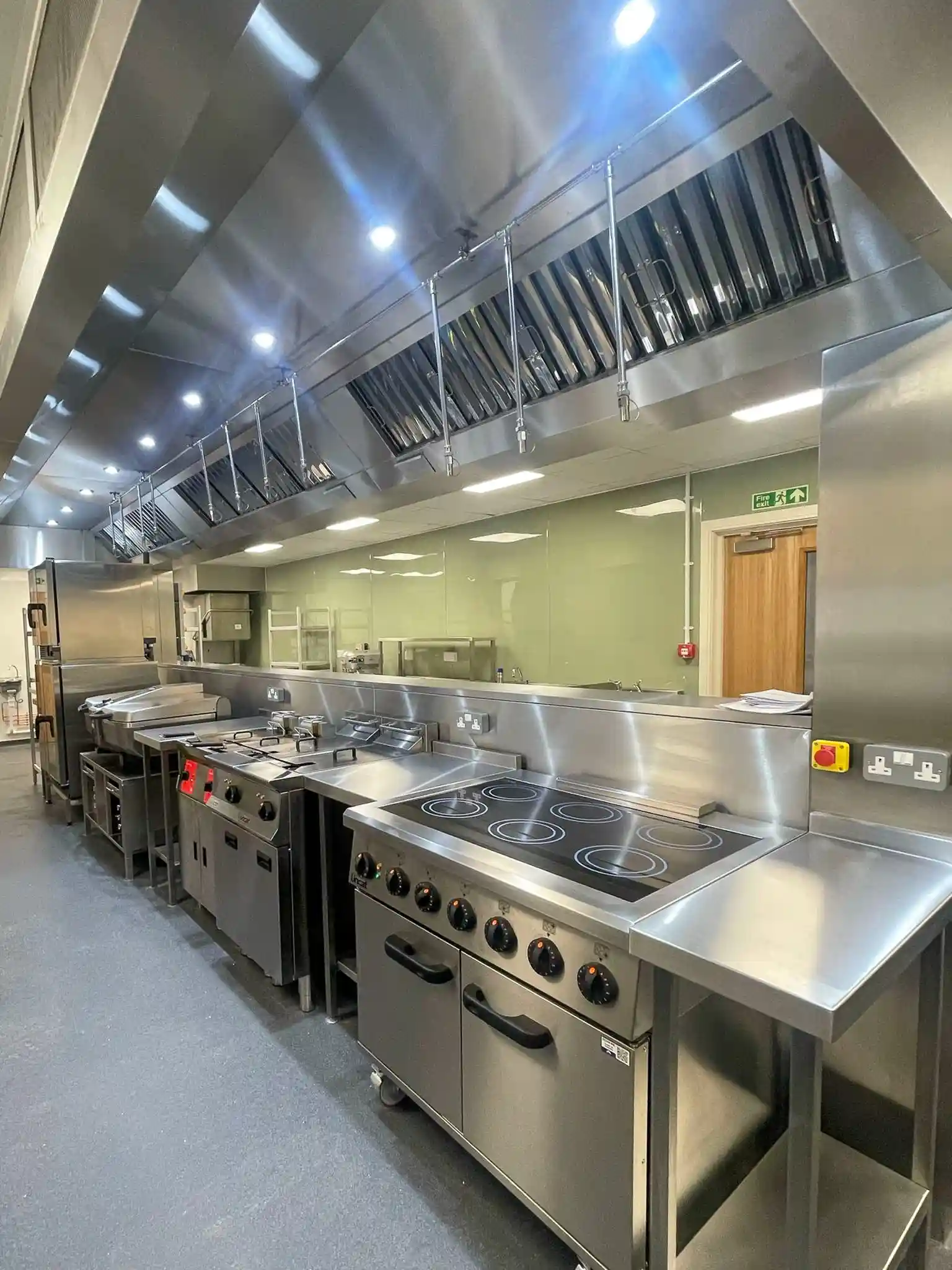
- Induction over Gas: Induction hobs are significantly more efficient than gas, as they heat the pan directly rather than the air around it, reducing the load on your extraction system.
Our guide to choosing equipment for your commercial kitchen can aid you in making the most effective and informed appliance choices.
Reducing Energy Consumption
A commercial kitchen is one of the most energy-intensive environments in any building. To reduce consumption, focus on the “Big Three”:
- HVAC and Extraction: Modern demand-controlled ventilation (DCV) systems use sensors to detect heat and steam, ramping fans up or down accordingly rather than running at 100% all day.
- Refrigeration: Ensure condensers are clean and seals are airtight. Even a small gap in a walk-in fridge door can cause energy bills to skyrocket.
- Switch-Off Schedules: It sounds simple, but a rigorous “switch-on/switch-off” schedule ensures that ovens and grills aren’t idling for hours before service.
Smart data for your commercial kitchen equipment can also help you reduce energy consumption by identifying which appliances may be using more energy than expected. This highlights areas where switch-off procedures may be overlooked or where maintenance is required to improve equipment performance.
Contact us at Airedale to learn about Lighthouse, our smart technology reporting system for your commercial kitchen.