
Why Airedale
BIM at Airedale
Find out how Airedale incorporate a BIM Level 2-compliant approach to improve outcomes for our clients
BIM at Airedale
BIM (Building Information Modelling) is revolutionising construction and maintenance across the UK, and the commercial kitchen industry is no exception. Allowing for greater collaboration, data sharing and transparency across stakeholders, BIM creates more efficient and informed kitchen design.
See our BIM guide to learn more about how we use this ingenious collaborative design, build and management strategy.
Contact us to see how Airedale’s use of BIM can benefit your industrial kitchen project.

What is Building Information Modelling?
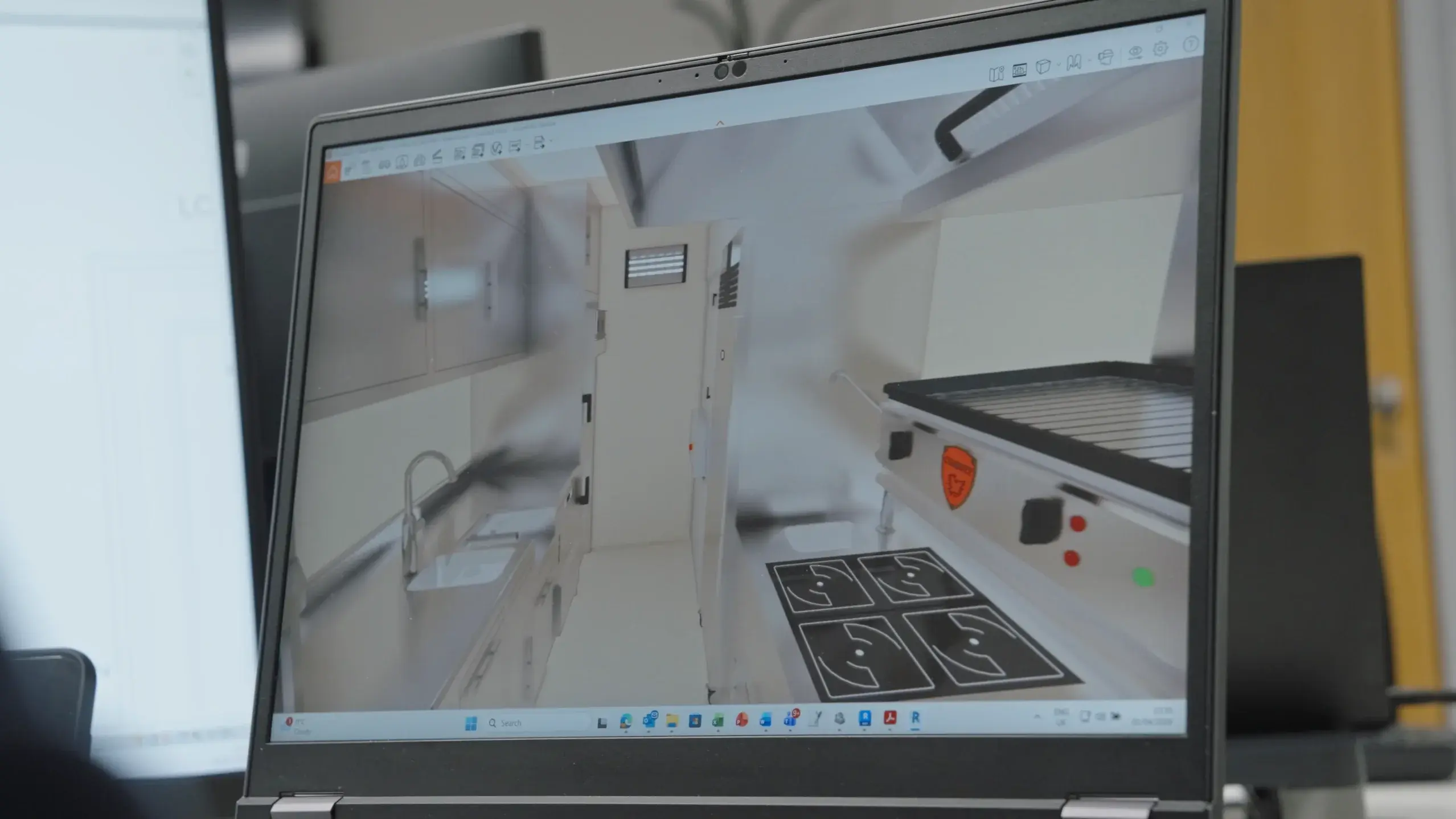
BIM is essentially a more collaborative and data-driven way for stakeholders to work on a construction project. It involves the use of specialist software to create realistic models of your kitchen. BIM objects in a design are intelligent, storing data that improves accuracy and coordination.
Airedale operates to BIM Level 2, in which the team works with 3D models and all stakeholders share information in a file format which contains all the relevant data.
What are the Benefits of BIM?
BIM brings so much to a commercial kitchen project, including:
- Better compliance with health and safety regulations.
- Cost management through easier tracking and estimation.
- Easier to incorporate sustainability features.
- Decisions are more informed with easily accessible data.
- Waste reduction.
- Streamlined processes.
- Time saving.
How Does Airedale Utilise BIM?
Commercial catering design, particularly commercial kitchen design, is at the core of our services here at Airedale. Over 75% of our projects are specified and designed by our 12-strong design team. As befits a market-leading company, we have invested heavily in both the software and personnel to propel us to the forefront of BIM provision, employing our own BIM team.
We are aware of the many challenges the wider construction industry faces in relation to BIM adoption, ranging from the costs to a relative lack of understanding of the benefits of BIM for client operators.
However, in the past year alone, we have worked collaboratively with main contractors’ design and BIM managers, project architects, and our private sector clients on an ever-increasing number of commercial catering projects.
If you are a Design or BIM Manager and your project’s BIM Implementation Plan (BIP) requires the commercial kitchen to be delivered to Level Two, please contact us.
FAQs
What Information Does a BIM Model Contain?
What Information Does a BIM Model Contain?
The data stored within a BIM model includes, but is not limited to:
Geolocated rooms and spaces
Zones and departments
Component systems
Products and materials
Required maintenance, including tools needed
Contact details to contractors, stakeholders, designers and specialists
Relevant documents
What Documents are Required for Building Information Modelling?
What Documents are Required for Building Information Modelling?
A number of documents can be used to build out your BIM model, primarily:
-
Your models (2D and 3D)
-
Specifications
-
Schedules
-
Drawings
-
Reports
-
COBie Data
Is BIM Mandatory in the UK?
Is BIM Mandatory in the UK?
For publicly funded projects, such as schools and hospitals, BIM level 2 has been a requirement as of the April 2016 Government Mandate.
Private sector buildings, such as pub kitchens, QSRs, and hotels, aren’t legally required to use BIM. However, the advantages are numerous. BIM allows you to ensure your kitchen design coordinates with the rest of your building and aligns information, standards and processes.